If your hair has been falling more than usual, or your skin feels dry no matter how much moisturizer you use, the cause might not be your shampoo, your soap, or even the weather. For many households across Pune, especially those on borewell or groundwater supply, the real culprit is sitting in the water itself. Understanding hard water effects on hair and skin is often the missing piece that explains months of frustration with products that never seem to work.
What Makes Water “Hard” in the First Place
Hard water simply means water carrying a higher concentration of dissolved calcium and magnesium. It’s extremely common in parts of Pune that rely on borewell or groundwater rather than treated municipal supply, and unlike a burst pipe or a visible leak, its effects build up so gradually that most people never connect the dots — until they’ve spent months troubleshooting hair and skin issues that had nothing to do with their routine at all.
Hard Water Effects on Hair: What’s Actually Happening
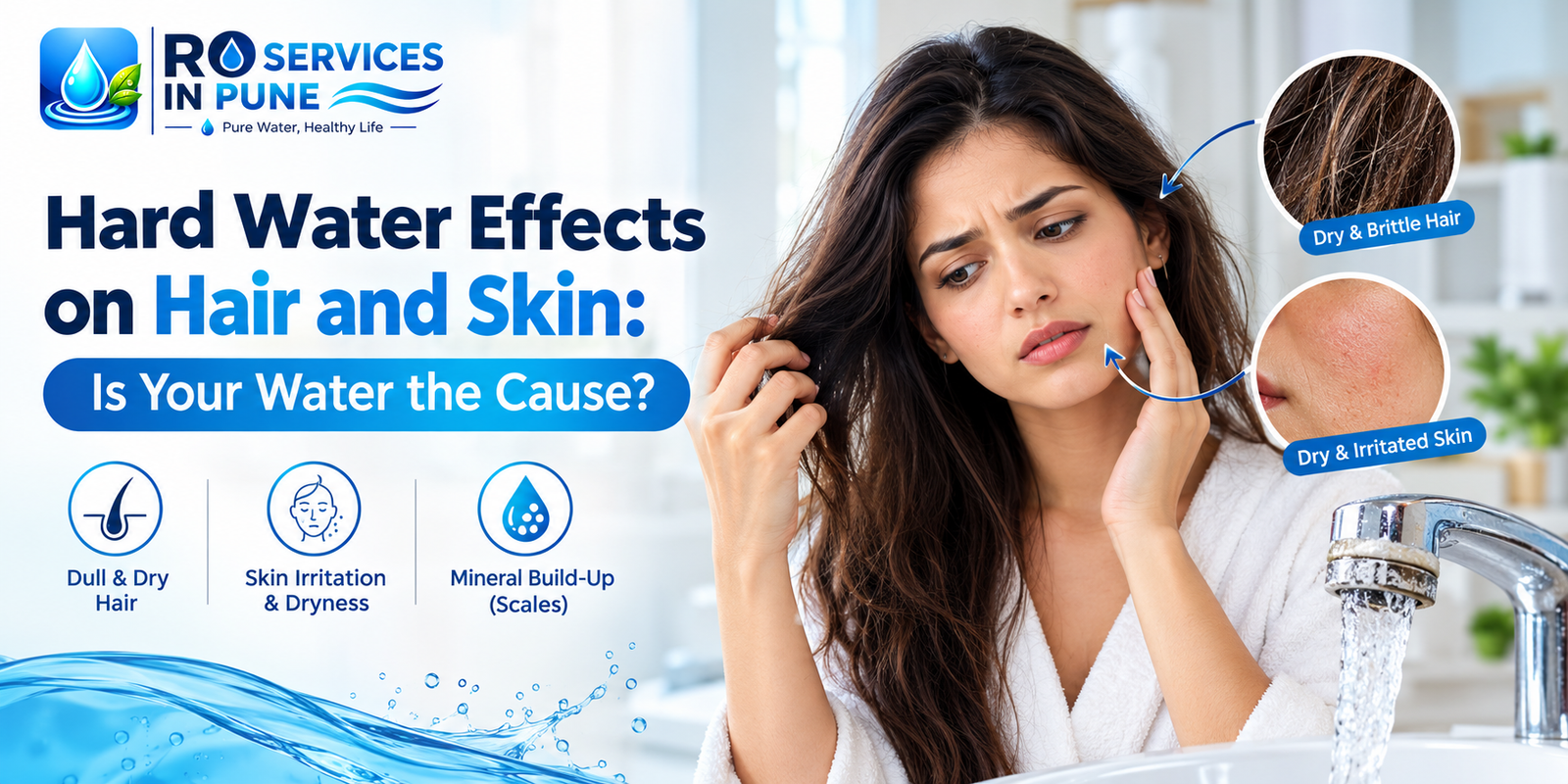
When hard water repeatedly comes into contact with your hair, the calcium and magnesium in it don’t rinse away cleanly. Instead, they leave behind a mineral residue that coats each strand. Over time, this buildup makes hair feel rough, look dull, and become more prone to breakage — because the mineral layer prevents moisture and conditioner from properly penetrating the hair shaft.
This is also closely tied to hard water hair fall. Hair coated in mineral residue becomes weaker at the root and more brittle overall, so normal daily shedding can feel far more noticeable than it actually is. Many people switch shampoos repeatedly trying to fix this, without realizing the shampoo was never the problem — the water washing it out is.
Hard Water Effects on Skin
The skin tells a similar story. Hard water interferes with how soap and cleansers lather and rinse off, often leaving a thin residue on the skin’s surface even after you’ve stepped out of the shower. This residue can clog pores, disrupt your skin’s natural moisture barrier, and leave skin feeling tight, dry, or rough shortly after bathing — regardless of how hydrating your soap or body wash claims to be.
For people already prone to sensitive or dry skin, hard water skin problems tend to be more pronounced, sometimes showing up as flakiness, mild irritation, or a persistent dullness that no amount of moisturizer seems to fully resolve.
Hard Water Dry Hair and Dry Skin: A Pattern, Not a Coincidence
If you’ve noticed hard water dry hair and hard water dry skin happening around the same time, that’s not a coincidence — it’s the same underlying cause showing up in two places. Both are the result of mineral buildup interfering with your body’s and hair’s natural moisture retention. Once the water itself is treated, both issues typically start improving together, which is often the clearest sign that hard water was the actual cause all along.
Could It Be Dandruff, Not Just Dryness?
It’s also worth mentioning hard water dandruff, since the two are frequently confused. Mineral buildup on the scalp can create flaking that looks similar to dandruff but doesn’t respond to anti-dandruff shampoos the way genuine dandruff does. If you’ve tried multiple dandruff treatments without success, hard water buildup on the scalp is worth ruling out before assuming it’s a scalp condition.
Why This Often Goes Undiagnosed for Months
The tricky part about hard water and skin and hair problems is that the symptoms look identical to dozens of other causes — poor diet, stress, weather changes, or product sensitivity. Most people try changing their shampoo, switching soaps, or adjusting their diet long before they ever consider testing their water hardness. That’s precisely why this connection goes unnoticed for so long in households across Pune’s harder-water areas.
It’s Not Just Your Hair and Skin — Hard Water Affects Appliances and Purifiers Too
Hard water’s impact doesn’t stop at hair and skin. The same mineral buildup that coats your hair also scales up geysers, washing machines, and taps over time. It also puts extra strain on RO purifiers — a membrane that’s constantly filtering hard water works harder and wears out faster than one working with pre-softened water, which is part of why RO filters and membranes need replacing more often in hard water households compared to those on softer, treated supply.
How to Tell If Hard Water Is Actually Your Problem
A few practical signs point clearly toward hard water rather than product-related causes:
- White, chalky residue on taps, showerheads, or washed utensils
- Soap or shampoo that doesn’t lather easily, even in generous amounts
- Hair or skin issues that persist despite switching products multiple times
- Your home runs on borewell or groundwater rather than fully treated municipal supply
- The problem seems to improve slightly when you use bottled or filtered water for washing
If several of these sound familiar, hard water is very likely playing a role, even if it hasn’t been the first thing you suspected.
The Fix: Treating the Water, Not Just the Symptoms
Switching shampoos, trying different moisturizers, or experimenting with home remedies can help marginally, but none of these address the actual cause — the mineral content in the water itself. A water softener installed ahead of your main water line treats water at the source, removing the calcium and magnesium responsible for both the hair and skin issues and the appliance scaling that comes with hard water. Instead of managing symptoms indefinitely, it resolves the actual problem before the water ever reaches your shower, tap, or purifier.
What Changes After Softening Your Water
Households that switch to softened water typically notice a difference within the first few weeks — hair feels less rough and more manageable, soap lathers properly again, and skin doesn’t feel tight or dry immediately after washing the way it used to. Existing mineral buildup on hair won’t disappear overnight, but the ongoing damage stops, giving hair and skin the chance to recover with normal care and products that finally work the way they’re supposed to.
Bringing It Together
If you’ve been dealing with unexplained hair fall, dry skin, or a scalp that won’t respond to treatment, it’s worth stepping back and asking a simpler question: is it really your products, or is it your water? Hard water effects on hair and skin are far more common across Pune than most people realize, particularly in areas relying on borewell supply, and they’re often mistaken for entirely different problems for months before the real cause is identified.
If this sounds familiar, get in touch for a water hardness check — it’s a simple first step toward finding out whether your water, not your routine, has been the real issue all along.
Frequently Asked Questions
If hair fall persists despite trying multiple shampoos and hasn’t improved with dietary or lifestyle changes, hard water is worth checking — especially if you also notice white residue on taps or soap that doesn’t lather well.
Mineral buildup on the scalp can create flaking that closely resembles dandruff but doesn’t respond to anti-dandruff shampoos the way genuine dandruff does, so it’s often mistaken for a scalp condition rather than a water issue.
Not fully — different shampoos or soaps may help slightly, but they don’t address the mineral content in the water itself, which is the actual cause of the buildup affecting your hair and skin.
Most households notice softer, more manageable hair and less dry skin within the first few weeks of using softened water, though existing mineral buildup on hair takes some time to fully wash out with normal care.
Hard water also scales up geysers, washing machines, and taps over time, and puts extra strain on RO membranes — so the same water causing your hair and skin issues is likely affecting your appliances as well.