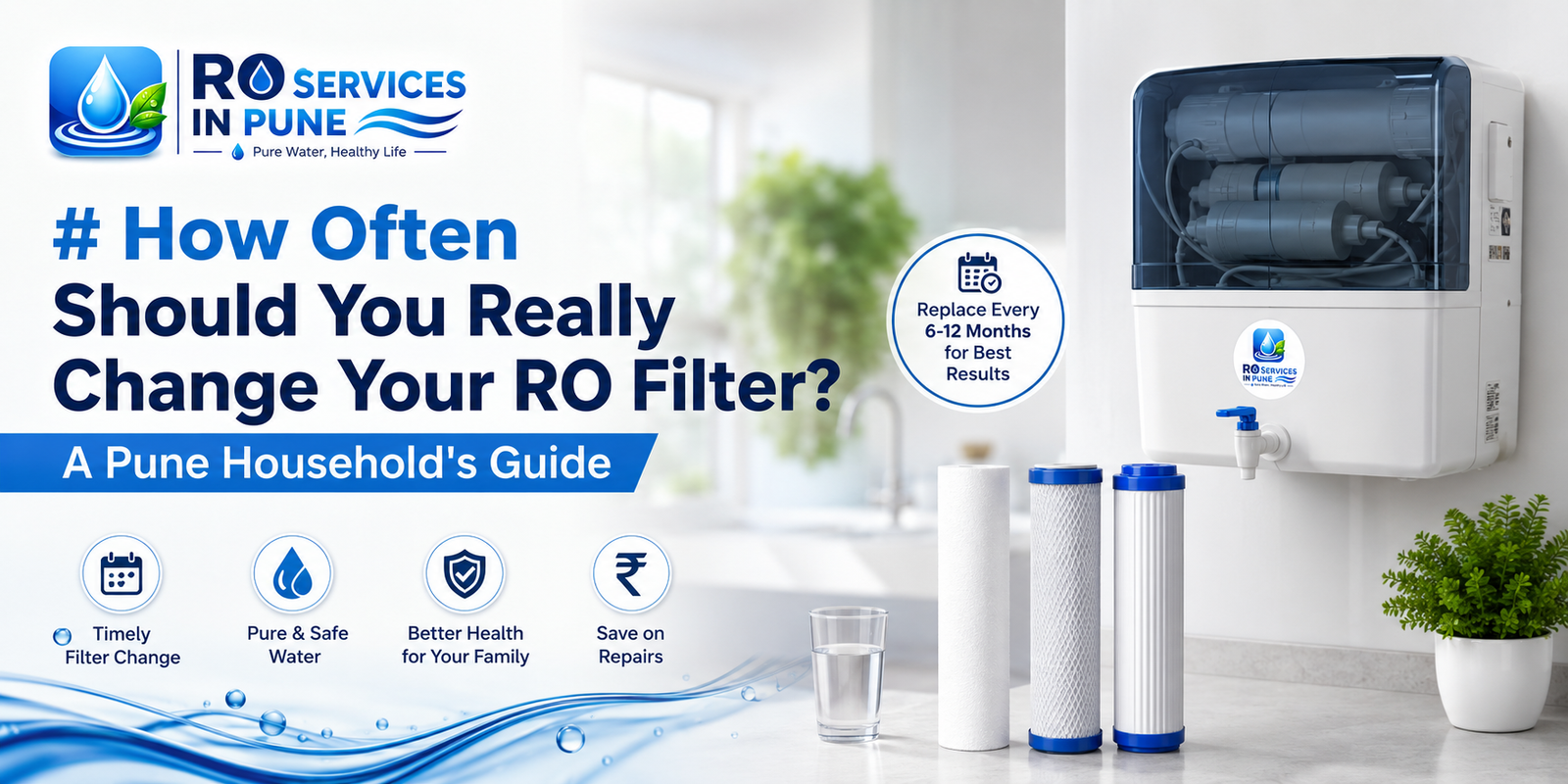
Most people don’t think about their RO filter until something feels off — the water tastes a little different, the flow slows down, or a friend mentions their purifier just broke down out of nowhere. By then, the RO filter replacement that should have happened months earlier is already overdue.
The truth is, there’s no single answer that fits every home. How often you need a filter or membrane change depends on your water source, how much your household uses the purifier daily, and which stage of filtration you’re talking about. This guide breaks down what actually determines the timeline for RO filter replacement, so you’re not just going by guesswork — or worse, waiting until your RO stops working altogether.
Why “Once a Year” Isn’t the Right Answer for Everyone
A lot of RO brands print a generic “change every 12 months” sticker on their units, and a lot of households take that at face value. But that number assumes average water quality and average usage — and Pune’s water isn’t always average. Areas relying more on borewell supply or dealing with higher sediment content will see filters clog faster than homes on relatively cleaner municipal lines, which means their RO filter replacement schedule should look different too.
Usage matters just as much. A family of 5 running the purifier all day looks nothing like a couple using it occasionally. If you’re on the higher end of either — harder water or heavier daily use — your actual RO filter change interval is probably shorter than the sticker suggests.
Breaking Down Each Filter Stage (They Don’t All Wear Out at the Same Rate)
Your RO system isn’t one single filter — it’s a series of stages, and each one has its own lifespan.
Sediment filter (pre-filter): This is the first line of defense, catching dust, sand, and rust before water even reaches the next stage. Depending on your water source, it typically needs replacing every 6 to 12 months — homes on borewell or sediment-heavy supply should lean toward the shorter end of that range.
Carbon filter (pre and post): Carbon filters remove chlorine and the “bad taste” that would otherwise reach and damage your main membrane. These generally last 6 to 12 months too, though water with higher chlorine content from municipal treatment can wear them out faster than that.
RO membrane: This is the core of the system, and thankfully the one that lasts the longest — typically 12 to 24 months, depending on your input water TDS and usage — since it’s responsible for filtering out heavy metals and dissolved solids that the earlier stages don’t catch. That lifespan drops significantly if the pre-filters upstream aren’t changed on schedule, since a worn sediment or carbon filter puts extra strain on the membrane. This is the main reason RO membrane replacement often gets needed earlier than expected — not because the membrane itself failed on its own, but because the filters ahead of it weren’t doing their job.
Post-carbon / polishing filter: The final stage, responsible for keeping your drinking water tasting fresh. It’s usually good for about 12 months. It’s easy to forget since it doesn’t affect flow the way earlier stages do, but skipping its RO filter replacement is exactly why some households notice a subtle taste change without realizing why.
Signs Your Filter Needs Changing
If you’re not tracking filter change dates (most people aren’t), here’s what tends to show up when a water purifier filter replacement is overdue:
- Slow water flow or noticeably low pressure at the tap
- A strange taste or odor in the purified water
- Cloudy water, or a high reading if you check it with a TDS meter (this measures the tiny dissolved solids you can’t see, so a rising number is often the earliest warning sign of all)
- A musty or slightly off smell from the storage tank
None of these mean your RO has completely failed — but they’re your system telling you it’s working harder than it should be, which shortens the life of everything downstream, including the membrane. If more than one of these sounds familiar, it’s worth reading up on the signs your RO purifier is silently failing — a lot of the same symptoms overlap.
What Happens If You Delay a Filter Change
It’s tempting to push a filter change back a few months, especially if the water still looks and tastes fine. But a clogged pre-filter doesn’t just reduce flow — it forces your pump to work harder, which shortens its life too. And once sediment or carbon filters are fully saturated, they can start releasing back some of what they’ve trapped, which defeats the purpose of having them in the first place.
The costlier mistake is delaying so long that it damages the membrane. A RO membrane change costs meaningfully more than a routine RO filter replacement, so staying on schedule with the smaller, cheaper components is what actually protects your bigger investment. Think of it less as an expense and more as insurance for the part of the system you’d least want to replace early.
A Simple Way to Stay on Track
You don’t need a spreadsheet to manage this — a sticky note on your purifier with the last change date works just as well. The general rule of thumb:
- Sediment filter: every 6–12 months
- Carbon filters: every 6–12 months
- Membrane: every 12-24 months
- Post-carbon filter: roughly once a year
If your water source is on the harder or borewell-fed side, lean toward the shorter end of each range. If you’re genuinely unsure what your water is like or how your filters are holding up, get in touch with our team and we can check it during a routine visit.
Should You DIY or Call a Technician?
Basic filter cartridges can technically be swapped at home if you’re comfortable with it, but getting the housing seal wrong or over-tightening a fitting is a common way people end up with a leak right after a “successful” filter change. Membrane replacement in particular is best left to a professional — it’s not just about swapping a part, but making sure the system is flushed and calibrated correctly afterward.
If it’s been a while since your last service, or you noticed any of the warning signs your RO is not working the way it should, it’s worth booking a proper RO Filter & Membrane Replacement visit rather than guessing at a DIY fix.
Why Choose RO Services Pune
We check every filter stage — not just the one that’s obviously due — during every visit, because a healthy system depends on all of them working together. Our technicians know how Pune and PCMC’s local water conditions affect filter life differently across localities, so the schedule we recommend is based on what your system is actually dealing with, not just a generic sticker.
Frequently Asked Questions
Slower flow, a change in taste, or a musty smell from the tank are the most common signs. If it’s been longer than the general timelines above, an RO filter replacement is worth checking even without an obvious symptom.
Yes, considerably. This is exactly why staying on schedule with your cheaper sediment and carbon filters matters — it protects the membrane from wearing out early.
You can, but water quality and flow will keep declining, and it puts more strain on your pump and membrane the longer you wait.
Yes. Areas with borewell-fed or harder water typically need sediment and carbon filter changes more frequently than areas on relatively softer municipal supply.
They may fit and work initially, but local or non-genuine filters often don’t seal as well or filter as effectively, which can shorten your membrane’s life and lead to more frequent breakdowns down the line. It’s usually worth confirming with your technician that genuine parts are being used.